
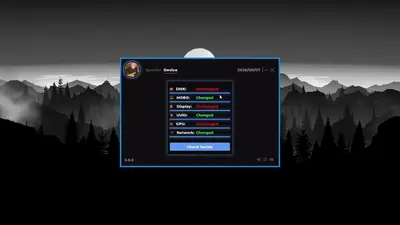
Rust HWID Spoofer: Hardware Identification and EAC Bans Explained
Learn what a Rust HWID spoofer is, how hardware identification differs from EAC account bans and what to know about compatibility and pricing.
HWID is one of the most commonly used terms in conversations about gaming bans.
Players encounter it when discussing hardware restrictions, account enforcement and software that changes device-identification information.
However, hardware identification and a Steam account's game-ban status are different matters.
What Does HWID Mean?
HWID stands for Hardware Identification.
It is a broad term describing information used to identify hardware or a computer environment.
Different services may use different identifiers.
There is no single universal hardware ID that every game uses in precisely the same way.
What Is an HWID Spoofer?
An HWID spoofer is third-party software marketed as changing or disguising selected hardware-identification information.
Its exact functionality depends on the application.
A product name does not establish which identifiers are affected or whether changes persist after restarting Windows.
How Do Rust Bans Work?
Rust uses Easy Anti-Cheat.
Facepunch states that an EAC Banned message indicates a game ban associated with the player's Steam account.
That ban prevents the affected account from accessing EAC-secured Rust servers.
Facepunch also warns that using additional accounts to evade an active ban can lead to further enforcement.
Does an HWID Spoofer Remove an EAC Ban?
Changing hardware information does not inherently reverse a Steam account's EAC game-ban status.
An HWID spoofer is not an official account restoration service.
No third-party product should guarantee that a banned account will be restored.
Rust HWID Spoofer Pricing
Rust-Cheat.net offers:
- HWID Spoofer Monthly: $50.
- HWID Spoofer Lifetime: $150.
Review the product's actual supported systems and license conditions.
HWID Spoofer vs. Cloud DMA
These are different categories.
HWID spoofing concerns device identification.
DMA concerns memory-access architecture.
The products are sold separately.
Conclusion
Understanding hardware identification is useful, but it should not be confused with account enforcement or ordinary EAC errors.
Always identify the actual restriction before evaluating related software.